
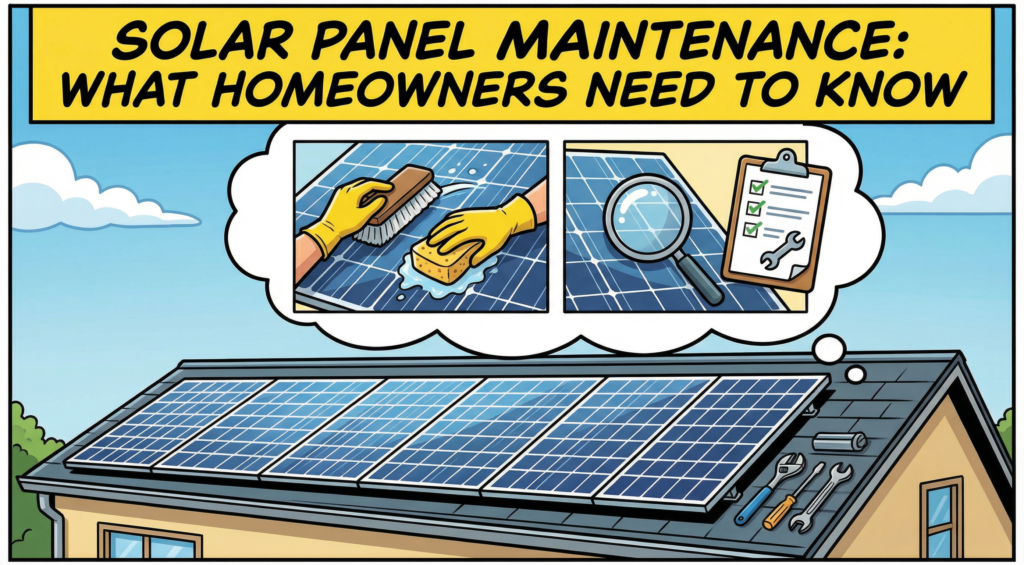
One of the biggest advantages of solar energy is how low-maintenance it is. Solar panels are designed to operate reliably for decades with minimal upkeep. However, a little care goes a long way in ensuring your system performs efficiently and delivers maximum savings year after year. Here’s what every homeowner should know about maintaining their solar panels.
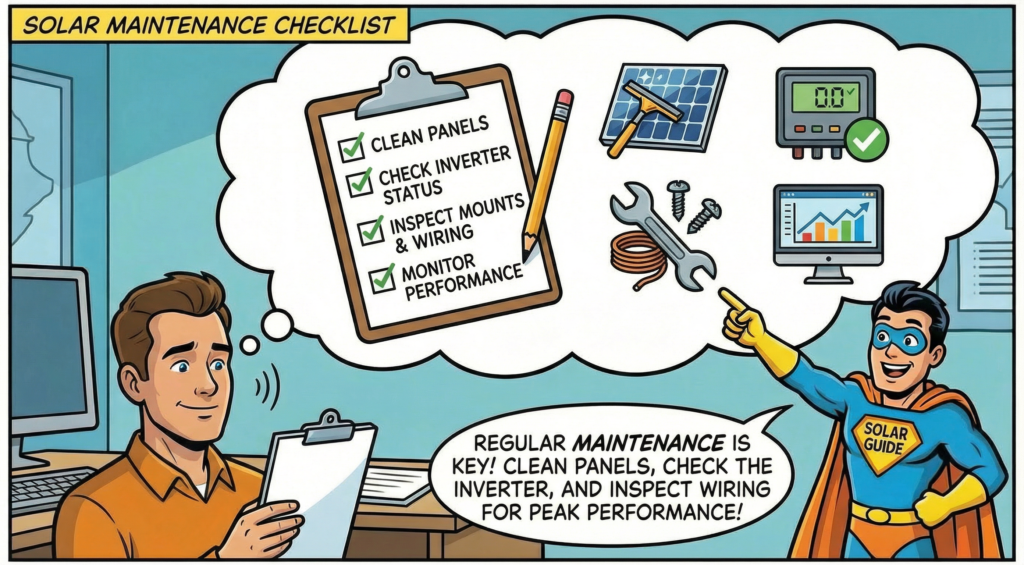
1. Solar Panels Require Very Little Maintenance
Solar panels have no moving parts, which means there is very little that can break or wear out. In most cases, normal rain helps keep panels clean, and the system continues to operate efficiently without regular intervention.
That said, occasional checks help ensure optimal performance and long-term reliability.
2. Keeping Solar Panels Clean
Dust, dirt, pollen, bird droppings, and leaves can accumulate on panels over time, especially during dry seasons.
- In most areas, rainfall naturally cleans panels
- If dirt buildup is visible or energy production drops, gentle cleaning may help
- Cleaning once or twice a year is usually sufficient
⚠️ Avoid harsh chemicals or abrasive tools like pressure washer. If panels are hard to access or mounted on steep roofs, professional cleaning is recommended for safety.
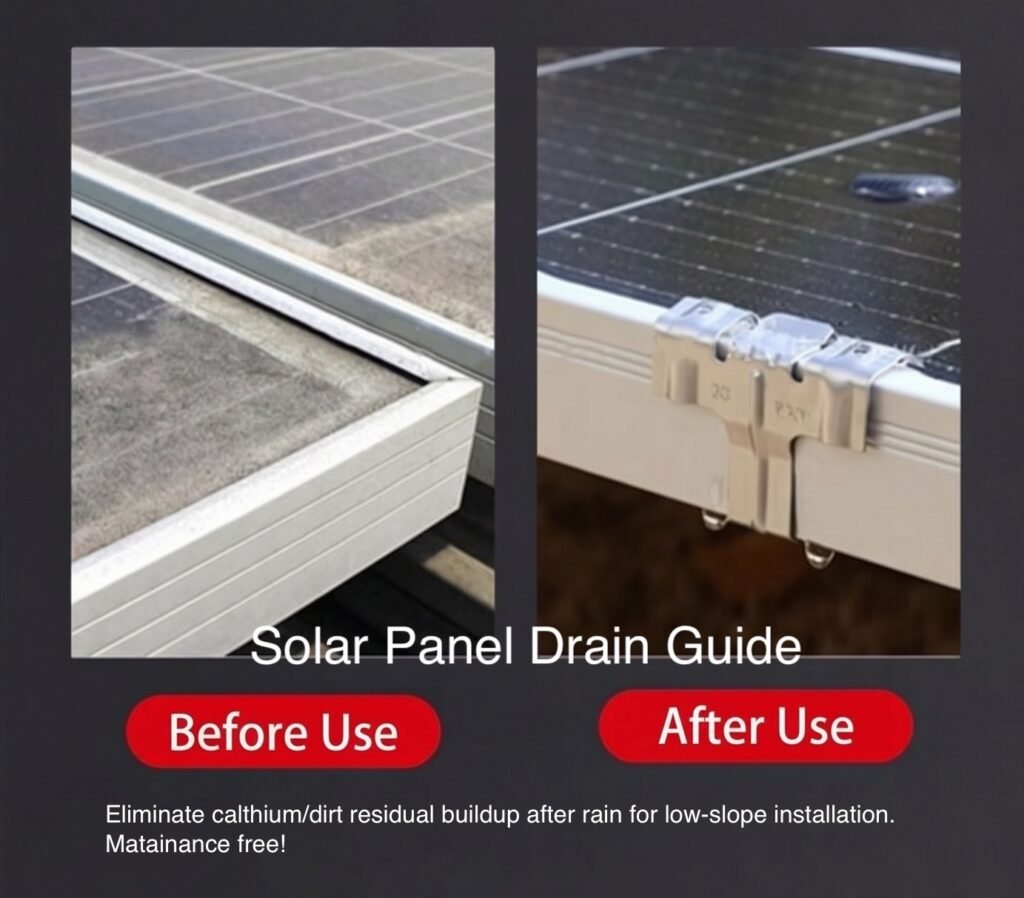
For low-slope installation, considering invest in drain clips to avoid residual buildup.
3. Monitoring System Performance
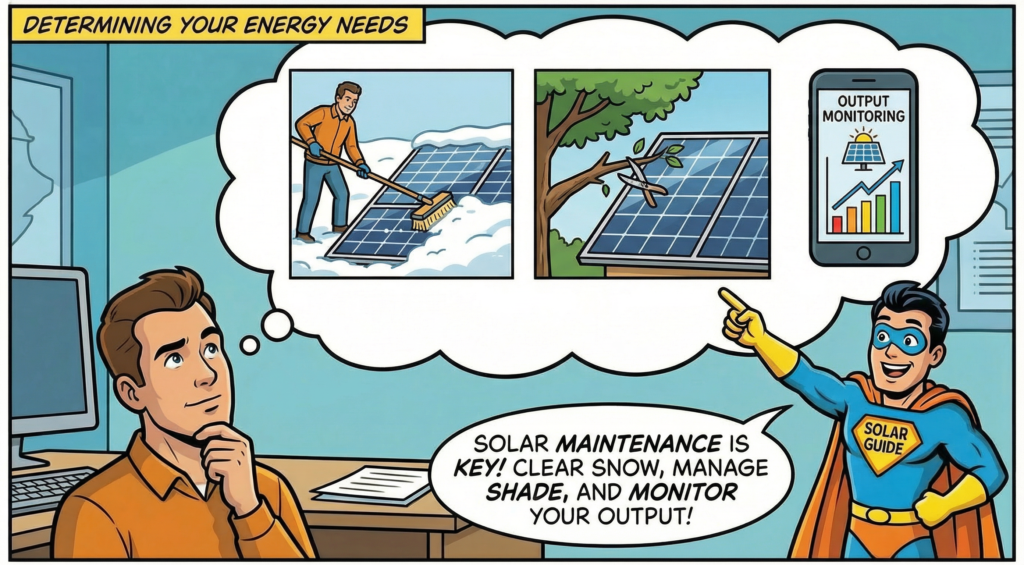
Modern solar systems include monitoring apps that allow homeowners to track energy production in real time.
You should:
- Check the app occasionally to confirm the system is producing power
- Look for sudden drops in output that aren’t related to weather
- If you change router Wi-Fi settings, remember to change accordingly in the solar system
- Contact your installer if performance seems unusually low
Early detection helps prevent small issues from becoming bigger problems.
4. Inverter and Battery Maintenance
While panels themselves require little attention, inverters and batteries are the most important system components to monitor.
- Inverters typically last 25 years, while batteries typically last 25 years
- Batteries may need performance checks depending on usage
- Keep battery systems in a clean, dry, well-ventilated space
Your installer will usually handle inspections and maintenance recommendations during scheduled checkups.
5. Seasonal Considerations
- Winter: Snow usually slides off panels due to their tilt and dark surface. Manual snow removal is rarely needed and should only be done safely.
- Summer: Higher temperatures are normal; ensure airflow around inverters and batteries is not blocked.
- Fall: Remove heavy leaf buildup if visible.
Solar systems are built to withstand harsh weather, including rain, snow, and wind.
6. Professional Inspections
A professional inspection every 1–2 years is a good practice. This includes:
- Checking electrical connections
- Inspecting mounting hardware
- Verifying inverter and battery performance
- Ensuring safety and code compliance
At CreateSolar, we offer ongoing support to keep your system operating at peak efficiency.
Final Thoughts
Solar panels are one of the most low-maintenance energy solutions available today. With occasional cleaning, basic monitoring, and professional inspections, your system can deliver clean, reliable energy for 25 years or more.
By taking simple maintenance steps, you protect your investment, maximize energy production, and enjoy worry-free solar power for decades.
Have questions about maintaining your solar system? Contact CreateSolar — we’re here to help. ☀️