
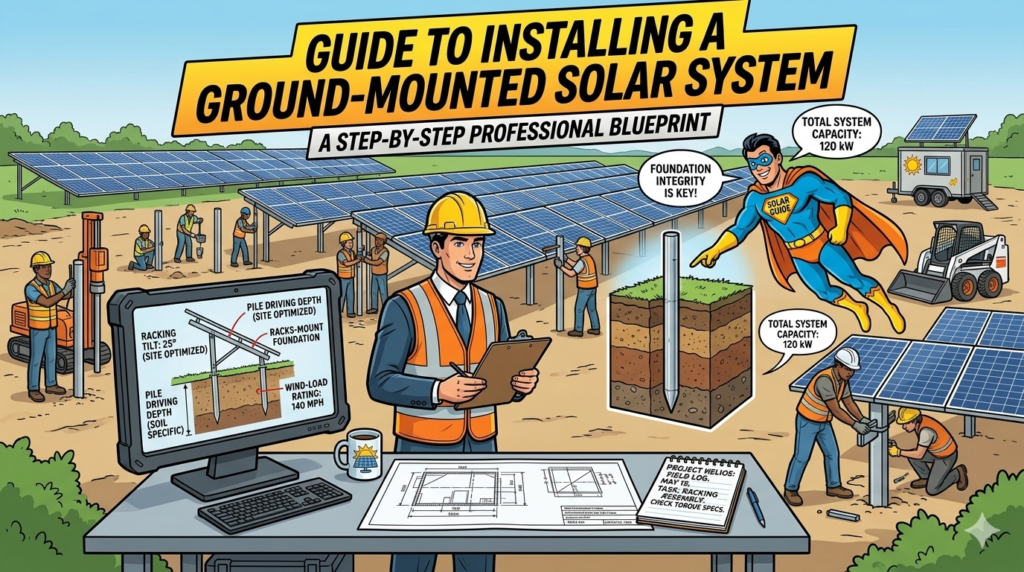
While many residential solar systems are installed on rooftops, ground-mounted solar systems are an excellent alternative when roof space is limited or unsuitable. Ground-mounted systems allow homeowners to install solar panels directly on the ground, often providing greater flexibility in system size, orientation, and performance.
This guide explains how ground-mounted solar systems work and what homeowners should consider before installing one.
What Is a Ground-Mounted Solar System?
A ground-mounted solar system is a solar array installed on a structure anchored into the ground instead of being mounted on a roof. The panels are typically installed on metal frames supported by posts or foundations.
Because the system is placed on open land, installers can position the panels at the optimal angle and direction for sunlight, which often improves energy production compared to some roof installations.
Ground-mounted systems are ideal for properties with:
- Large yards or open land
- Roofs that face the wrong direction
- Roofs with shading or limited space
- Older roofs that may not support solar panels
Benefits of Ground-Mounted Solar Systems
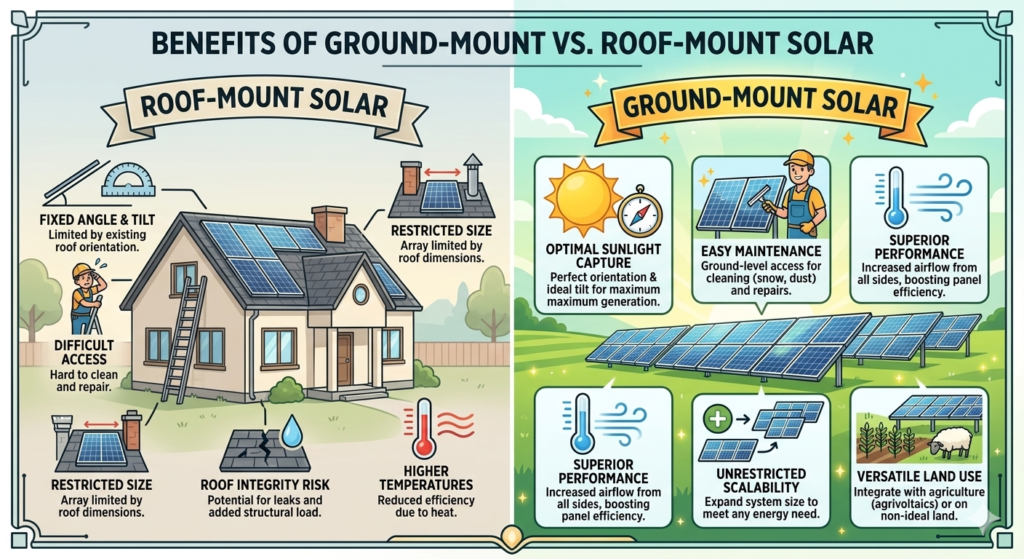
1. Optimal Panel Orientation
Ground-mounted systems can be installed at the best angle and direction to maximize sunlight exposure throughout the year, helping increase overall energy production.
2. Larger System Size
Since installation is not limited by roof space, homeowners can install larger systems to meet higher electricity demand.
3. Easier Maintenance
Panels installed closer to the ground are generally easier to access for inspection, cleaning, and maintenance.
4. Flexible Installation Locations
Solar arrays can be placed in the sunniest area of the property rather than being restricted to the roof.
Steps to Install a Ground-Mounted Solar System
1. Site Assessment
The first step is evaluating the property to determine the best location for the solar array. Installers analyze factors such as:
- Sun exposure and shading
- Ground conditions and soil stability
- Distance to the home’s electrical panel
- Available space for the system
Proper site selection is critical to ensure the system generates maximum solar energy.
2. System Design
Once the location is selected, the installer designs the solar system based on:
- Household electricity consumption
- Available installation space
- Desired system size
- Electrical configuration
The design also determines the number of panels, mounting structure, and inverter type.
3. Permits and Utility Approval
Like rooftop systems, ground-mounted installations require permits and approval from local authorities and the utility provider. This step ensures the system meets building codes, electrical standards, and grid interconnection requirements.
Installers typically handle:
- Building permits
- Electrical permits
- Utility interconnection applications
- Net metering registration
4. Foundation and Mounting Installation
The mounting structure must be securely anchored to the ground. Depending on the project, installers may use:
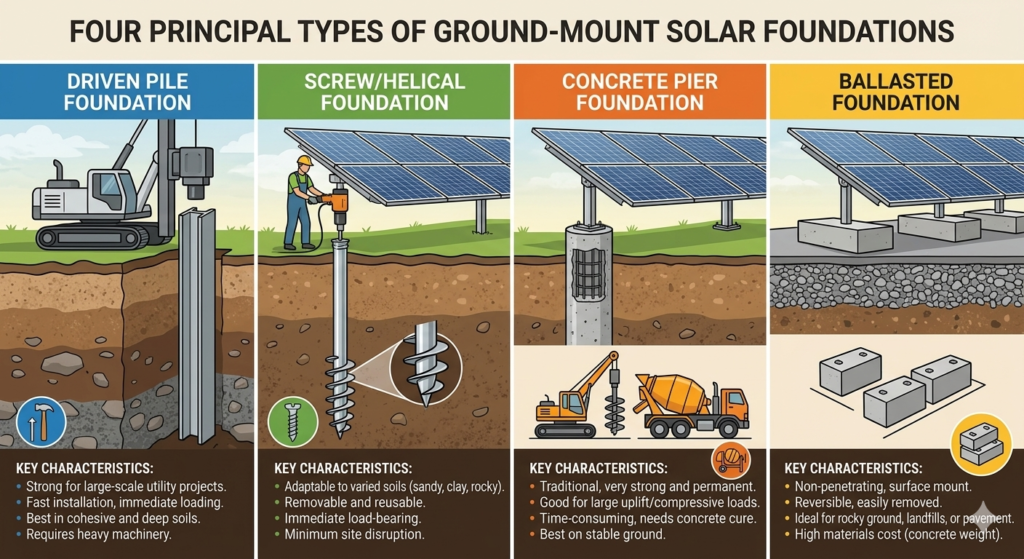
- Pile driven into the ground
- Concrete footings
- Ground screws
- Ballasted foundation
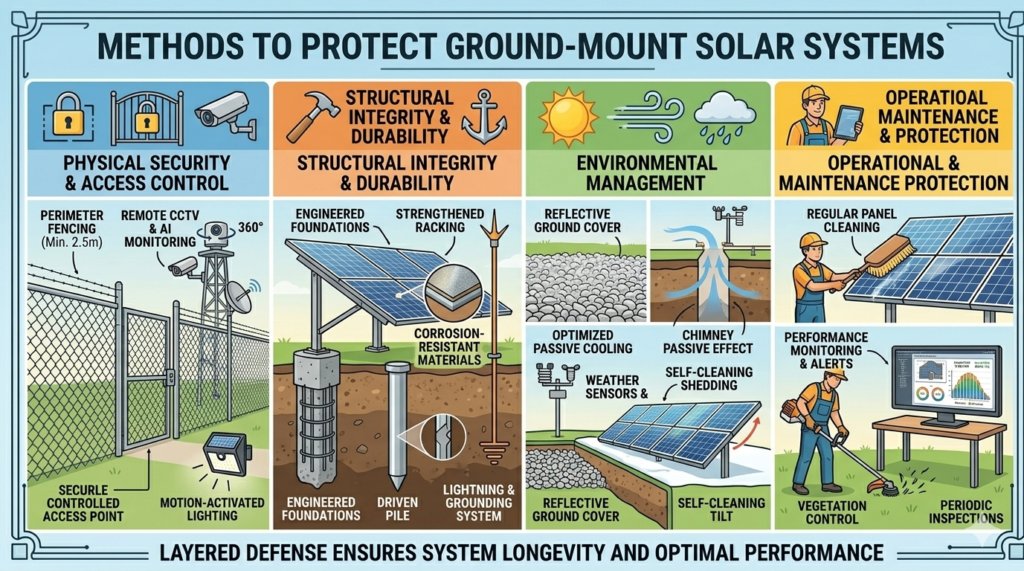
The support structure ensures the solar panels remain stable and can withstand wind, snow, and weather conditions.
5. Solar Panel Installation
Once the mounting system is complete, the solar panels are attached to the frame. The panels are then wired together and connected to the inverter system that converts solar energy into usable electricity for the home.
6. Electrical Connection and Inspection
After installation, the system is connected to the home’s electrical panel and prepared for grid connection. The installation must pass inspections to ensure it meets electrical safety standards.
Once approved, the solar system can be activated.
Things to Consider Before Installing Ground-Mounted Solar
Before choosing a ground-mounted system, homeowners should consider a few important factors:
- Land availability: Adequate space is required for panel installation and safe spacing between rows.
- Installation cost: Ground-mounted systems can sometimes cost more than rooftop systems due to additional mounting structures and trenching.
- Local regulations: Some municipalities have zoning or permitting requirements for ground-mounted solar systems.
- Landscape planning: The system should be placed in a location that does not interfere with property use or future development.
Is a Ground-Mounted Solar System Right for You?
Ground-mounted solar systems are an excellent solution for homeowners with available land who want maximum flexibility and performance from their solar investment. By allowing optimal placement and larger system sizes, ground-mounted installations can generate significant clean energy and reduce electricity costs.
If your roof is not ideal for solar, a ground-mounted system may be the perfect alternative.
Interested in installing a ground-mounted solar system?
CreateSolar can help you evaluate your property and design a system that maximizes solar production and long-term savings.
Contact CreateSolar today to learn more about ground-mounted solar solutions. ☀️