
Solar energy can seem complicated at first, especially with all the technical terms involved. Understanding the basics makes it much easier to compare systems, understand proposals, and make confident decisions. Below is a simple guide to the most common solar terms every homeowner should know.
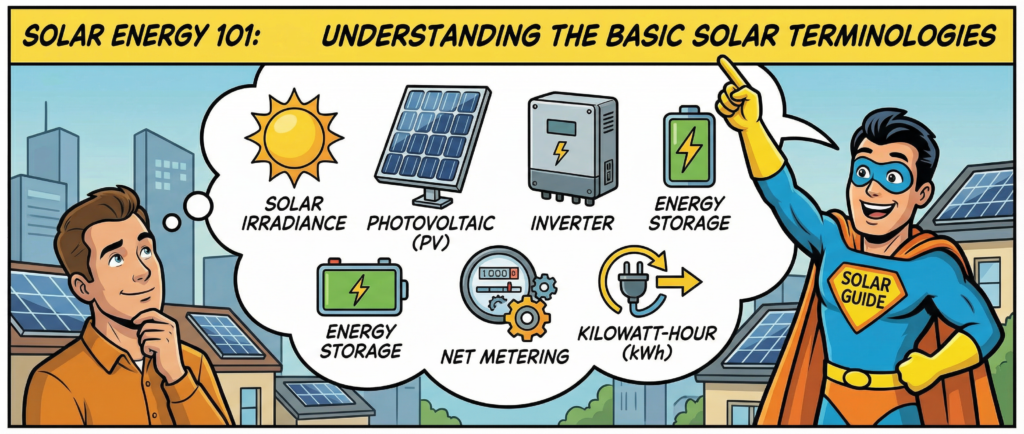
1. Solar Panel (PV Panel)
A solar panel, also called a photovoltaic (PV) panel, converts sunlight into electricity. Panels are usually installed on rooftops or ground mounts and are the main source of solar power in a system.
2. Kilowatt (kW) and Kilowatt-hour (kWh)
- kW (Kilowatt) measures power — how much electricity a system can produce at a given moment.
- kWh (Kilowatt-hour) measures energy — how much electricity is used or produced over time.
Example: A 10 kW system producing power for one hour generates 10 kWh of energy.
3. Solar System Size
Solar system size is measured in kilowatts (kW) and refers to the total capacity of all solar panels combined. Larger systems produce more electricity and can offset more of your energy usage.
4. Inverter
The inverter converts the DC (direct current) electricity produced by solar panels into AC (alternating current), which is what your home appliances use. Common types include:
- String inverters
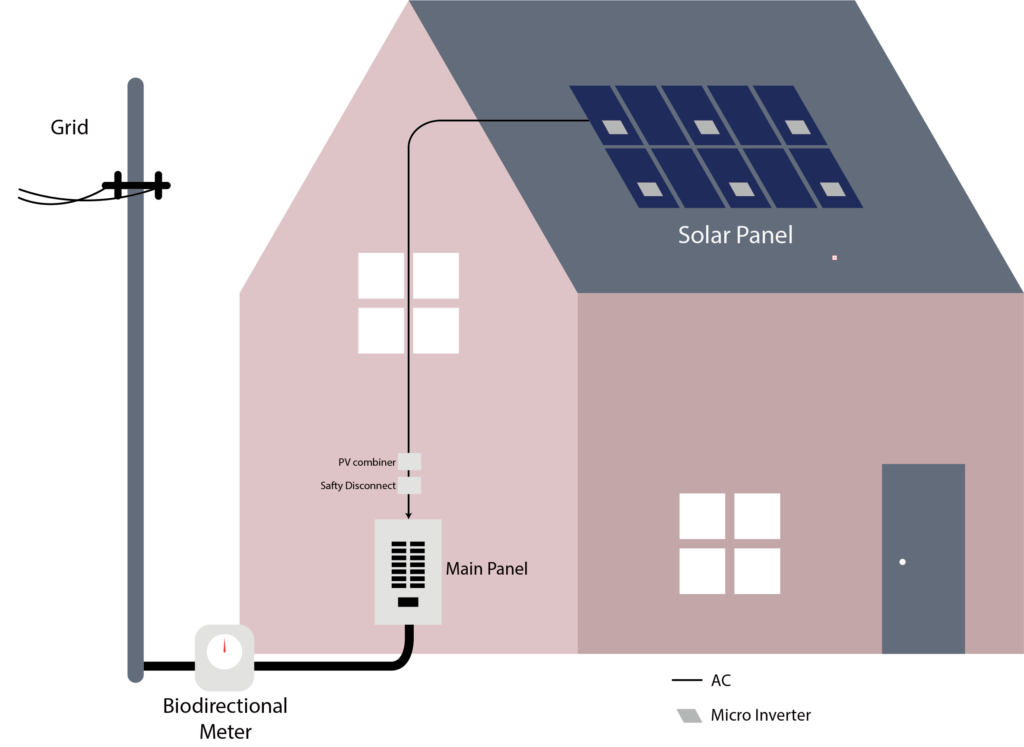
- Microinverters(for grid-tied system)
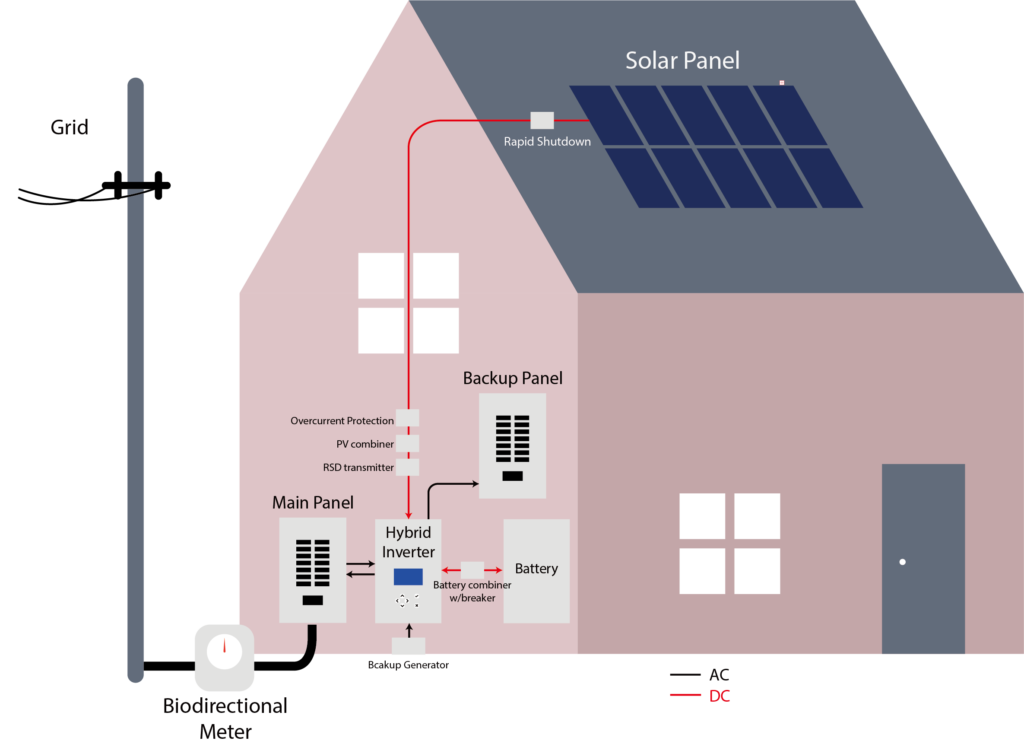
- Hybrid inverters (for hybrid system with battery)
5. Battery Storage
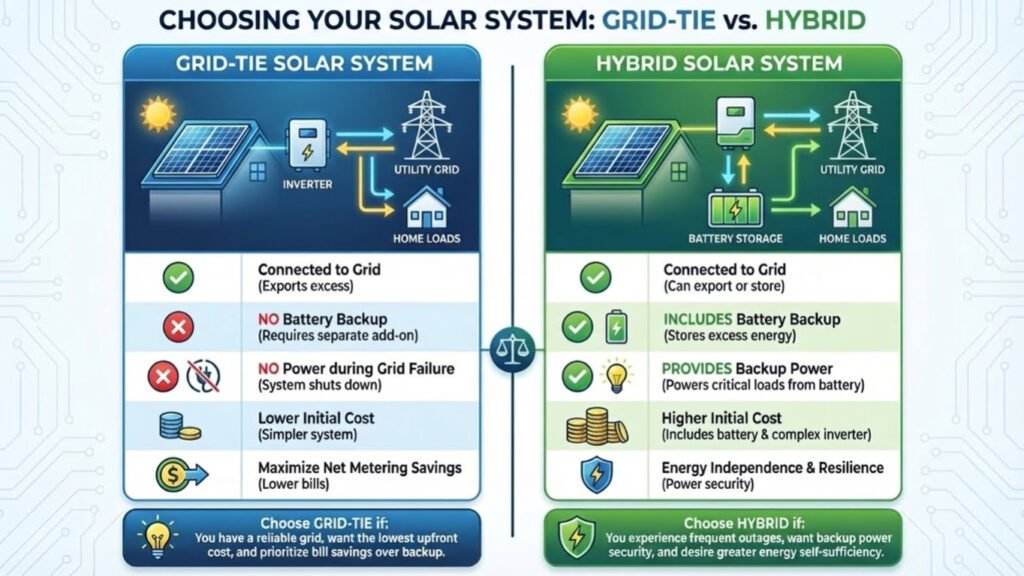
A solar battery stores excess solar energy generated during the day for use at night, during peak electricity rates, or during power outages. Batteries increase energy independence and reduce reliance on the grid.
6. Grid-Tied System
A grid-tied solar system is connected to the utility grid. Your home can draw power from the grid when needed and send excess solar energy back to the utility.
7. Hybrid Solar System
A hybrid solar system combines solar panels, battery storage, and grid connection. It offers the best of both worlds: energy savings, backup power, and flexibility.
8. Net Metering
Net metering allows homeowners to send excess solar energy to the grid and receive credits on their electricity bill. These credits can be used when solar production is lower.
Final Thoughts
Understanding solar terminology helps you make informed decisions and better understand how your system works. While solar technology may seem complex, the benefits are simple: lower bills, cleaner energy, and long-term savings.
At CreateSolar, we explain everything clearly and guide you through each step — from consultation to installation and beyond.
Contact CreateSolar today to learn more about solar in simple, easy-to-understand terms. ☀️