
Choosing the right solar system size is one of the most important steps in going solar. A properly sized system ensures maximum savings, reliable performance, and full compliance with electrical codes. Below are the three key factors we use at CreateSolar to determine the ideal solar system size for your home.
1. Solar System Size Based on Electrical Usage
The starting point for sizing a solar system is your electricity consumption. This information is usually found on your utility bills and measured in kilowatt-hours (kWh).
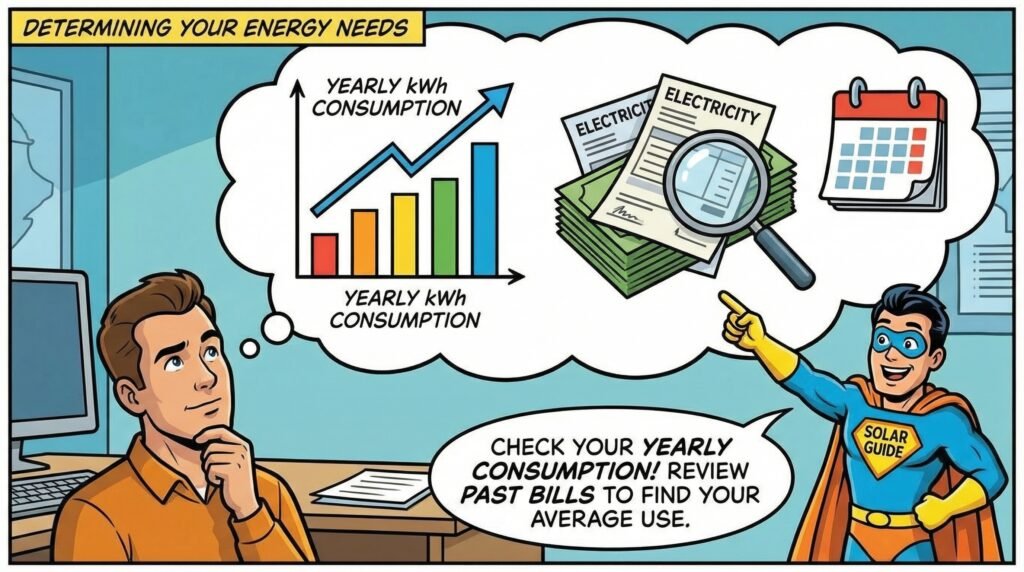
- We review your past 12 months of electricity usage to understand seasonal variations.
- The goal is to offset a percentage (or all) of your annual energy consumption with solar.
- For example, if your household uses 10,000 kWh per year, a solar system around 8–10 kW may be required, depending on sunlight conditions and system efficiency.
Homes with electric heating, EV chargers, heat pumps, or home offices typically require larger systems. Future energy needs are also considered to ensure your system remains effective for years to come.
2. Solar System Size Based on Roof Dimensions and Layout
Your roof plays a major role in determining how large a solar system can be installed.
Key factors include:
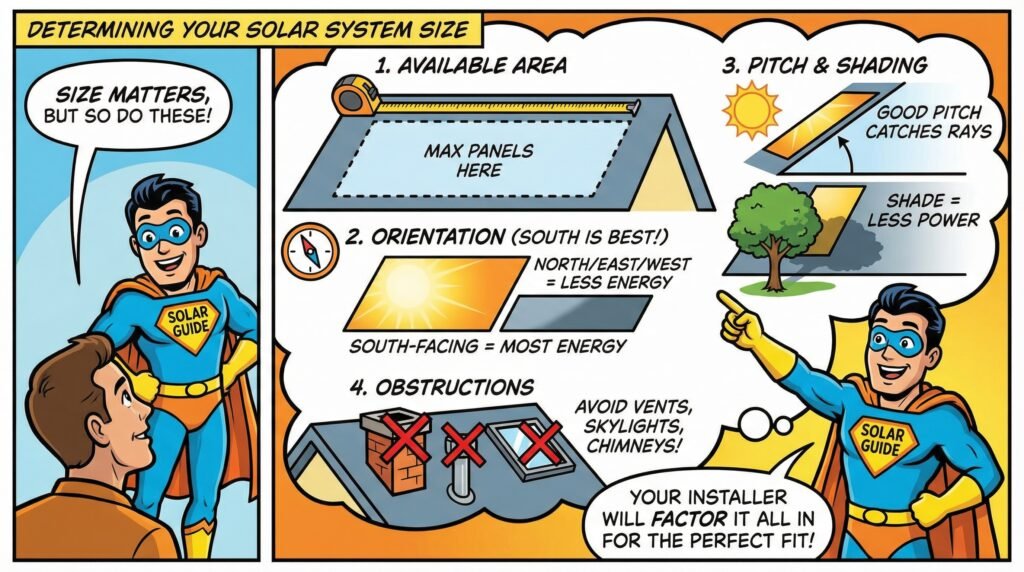
- Available roof area
- Roof orientation (south-facing roofs produce the most energy)
- Roof pitch and shading
- Obstructions such as vents, skylights, or chimneys
Each solar panel requires a certain amount of space, so even if your energy usage is high, your roof layout may limit system size. In these cases, we design the most efficient panel arrangement possible or recommend high-efficiency panels to maximize output.
At CreateSolar, we carefully assess roof dimensions and layout to ensure optimal performance without compromising aesthetics or roof integrity.
3. Verify Code Requirements
Great! Now you know how much solar you should aim for, and how much it can physically fit on your roof. There is one more step. That is to verify with various codes and AHJ requirements. This would usually include Canadian Electrical Code, Building Code, Fire Code, and Local AHJ requirements, to ensure safety and proper operation.
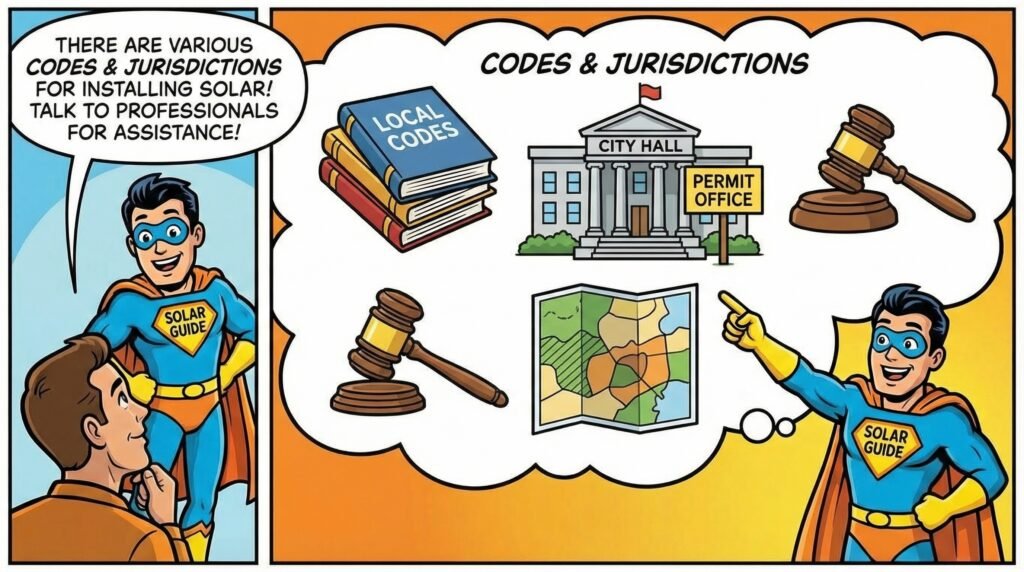
CEC requirements affect system size through:
- Main service panel capacity (e.g., 100A, 200A)
- Busbar and breaker limitations
- Grid interconnection rules
In some cases, electrical upgrades or load management solutions may be required to support a larger solar system. These regulations ensure your system operates safely and is approved by local authorities and utility providers.
Your Provincial Building Code and Fire Code may also include structural loading and setback requirements of the solar system. It’s always recommend to double check with local AHJs or professionals to comfirm the requirements.
CreateSolar designs every system to be fully code-compliant, handling all technical requirements, permits, and inspections on your behalf.
Final Thoughts
Determining the right solar system size is a balance between energy usage, roof capability, and electrical code requirements. A professional assessment ensures your system delivers maximum savings, long-term reliability, and full compliance.
At CreateSolar, we take care of the entire process — from energy analysis and roof assessment to code compliance and installation — so you can enjoy a worry-free transition to solar energy.
Contact us today for a free solar assessment and personalized system design. ☀️